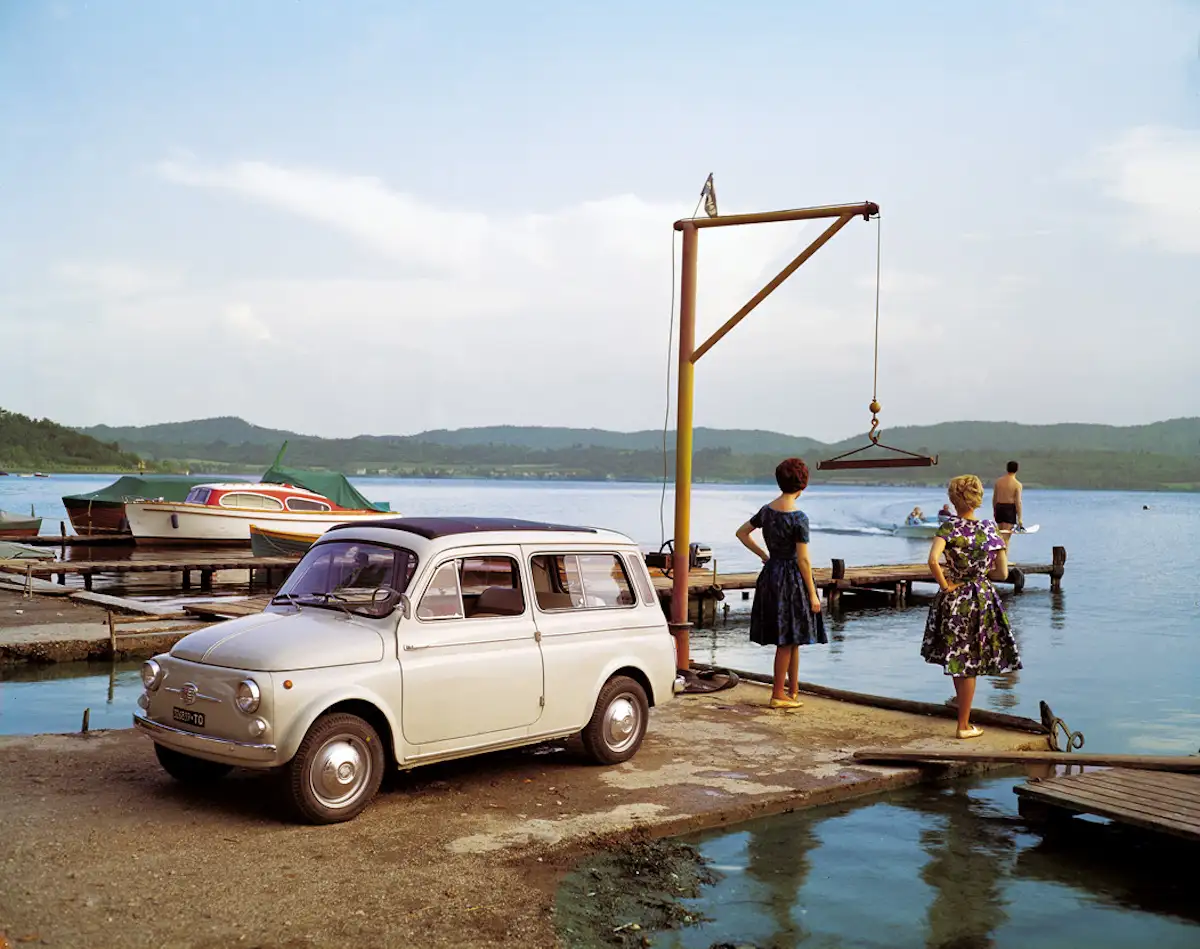
The Fiat 500 is rightfully considered one of the most important cars of all time. A true people’s car, it got a whole nation moving under its own steam for comparatively little. Important in Italy at the time, as the country slowly staggered back onto its feet.
It might have been small in outlay, and in engine output, but it was certainly big in space.
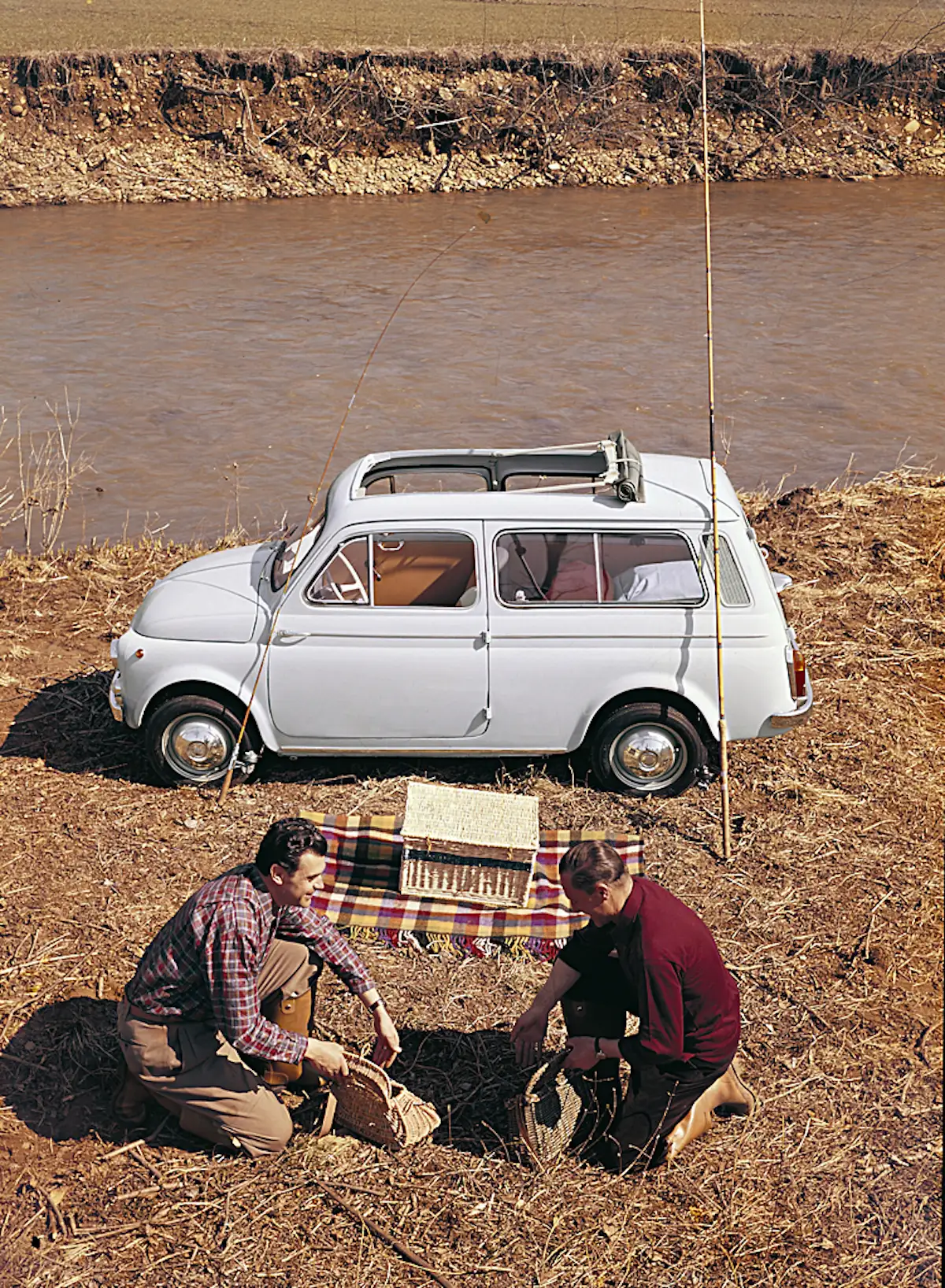
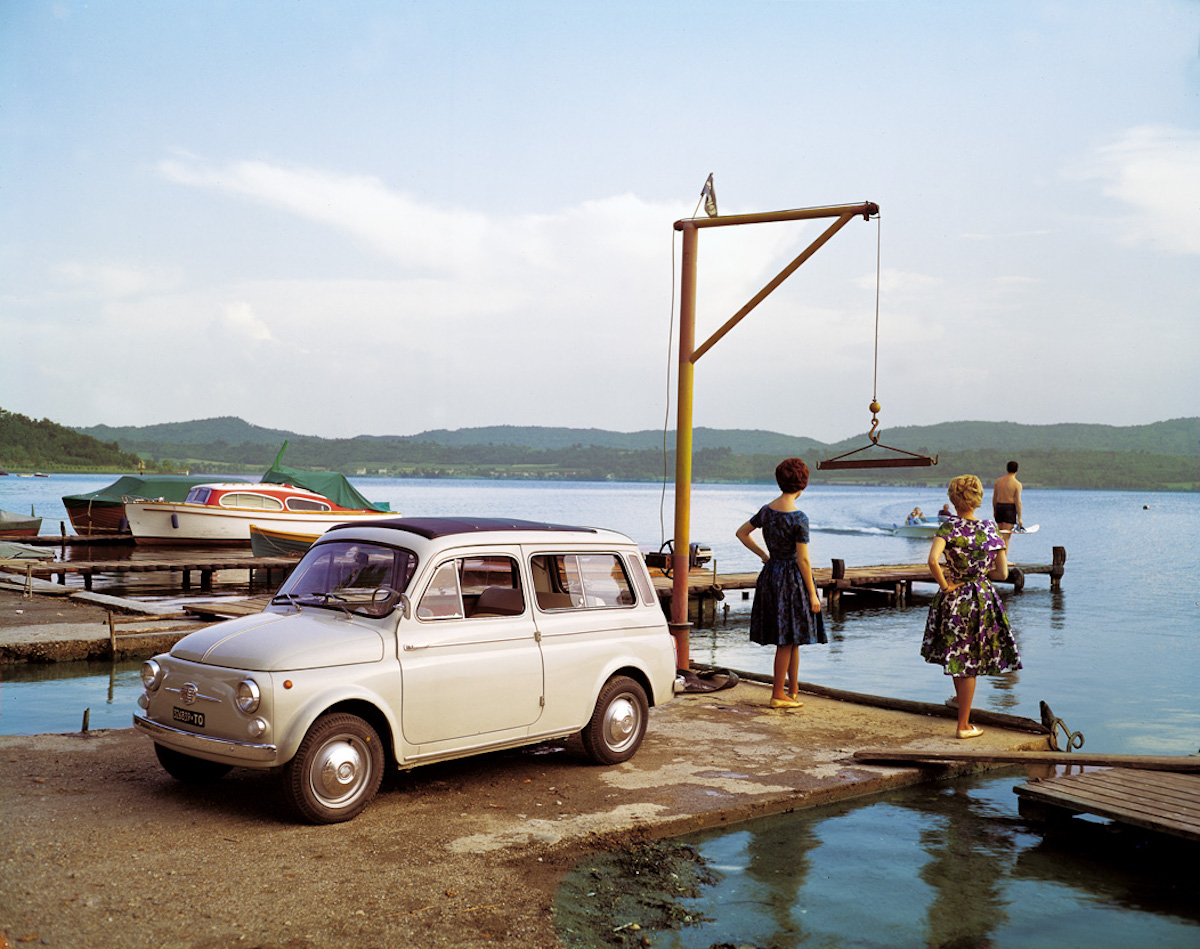
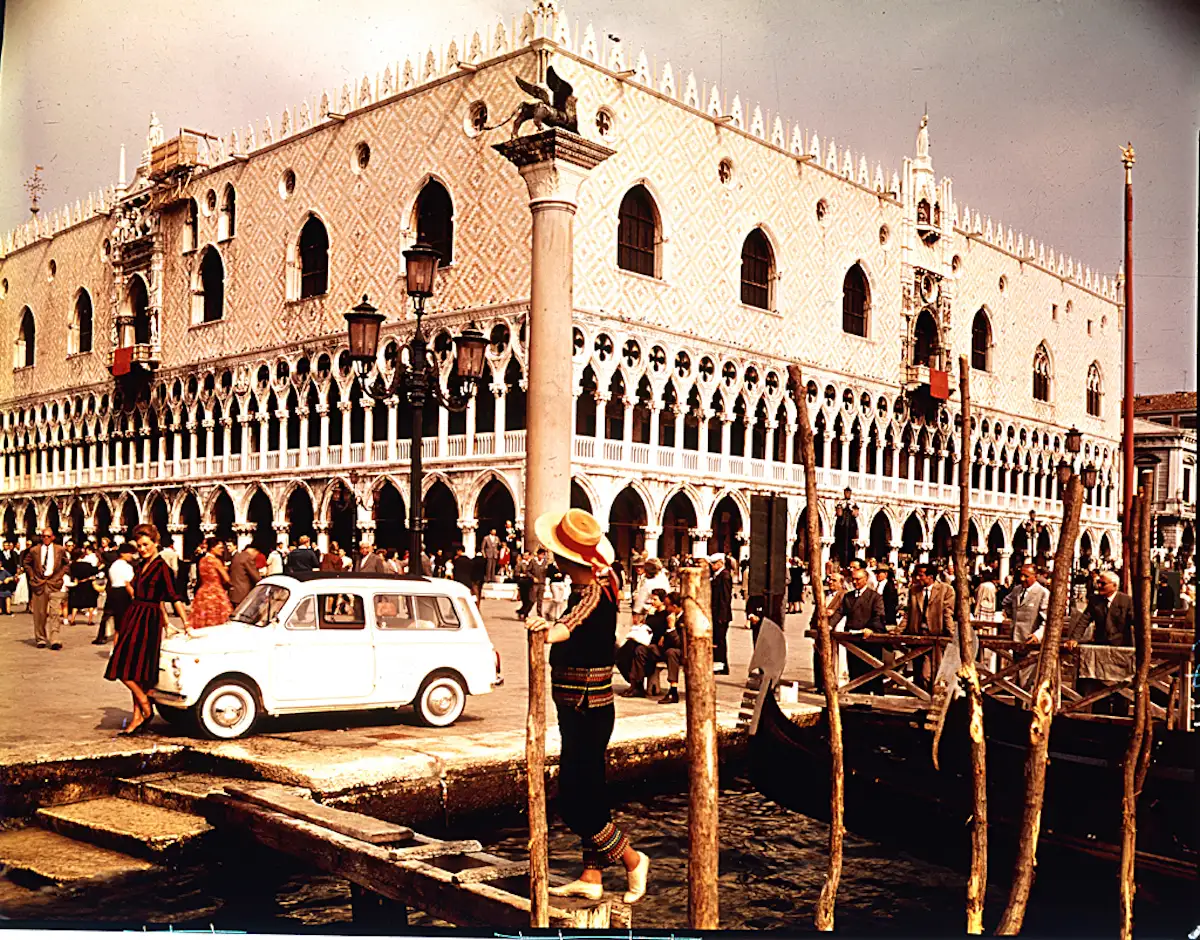
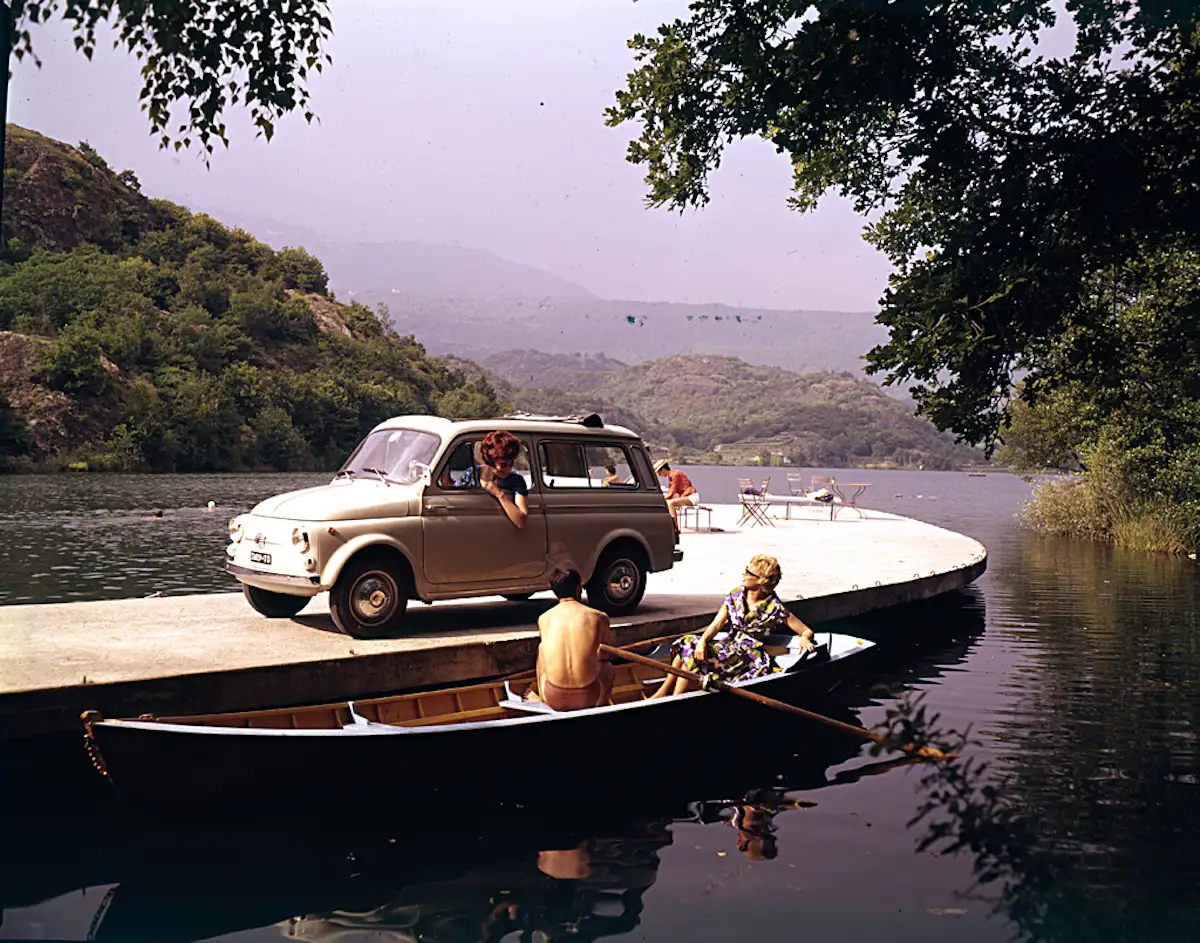
The best in that regard was saved for the Giardiniera of 1960, launched three years after the two-seat Nuova kickstarted the small-car revolution and finally replaced the ageing Topolino.
An example of the small but mighty estate is expected to grace the Winter Wagons display at the Scramble on Sunday 8 January.
Many of the estates around it require plenty of room. Not so here: the Giardiniera is less than 3m long and not even half as wide. A VW Up!, tiny by modern car standards, dwarfs it by more than half a metre and an Ami is only a little smaller.
Cleverly, under the supervision of the father of front-wheel drive, Dante Giacosa, Fiat’s engineers rotated the tiny rear-mounted 500cc air-cooled engine so it could lay on its side and create a long, flat load bay. Lengthening the wheelbase only improved matters, adding yet more practicality.
The roof rolls back almost the entirety, and it was the last 500 to entertain suicide doors – and it did so throughout its life.
And no 500 lived longer than a Giardiniera: production eventually ended in 1978, when an Autobianchi badge had been on the pretty little nose for a decade. Cars had long stopped being imported to the UK, and they are a rare sight on modern roads.
To see the 500 Giardiniera, join us for the first Scramble of 2023 on Sunday 8 January. Buy your tickets now