
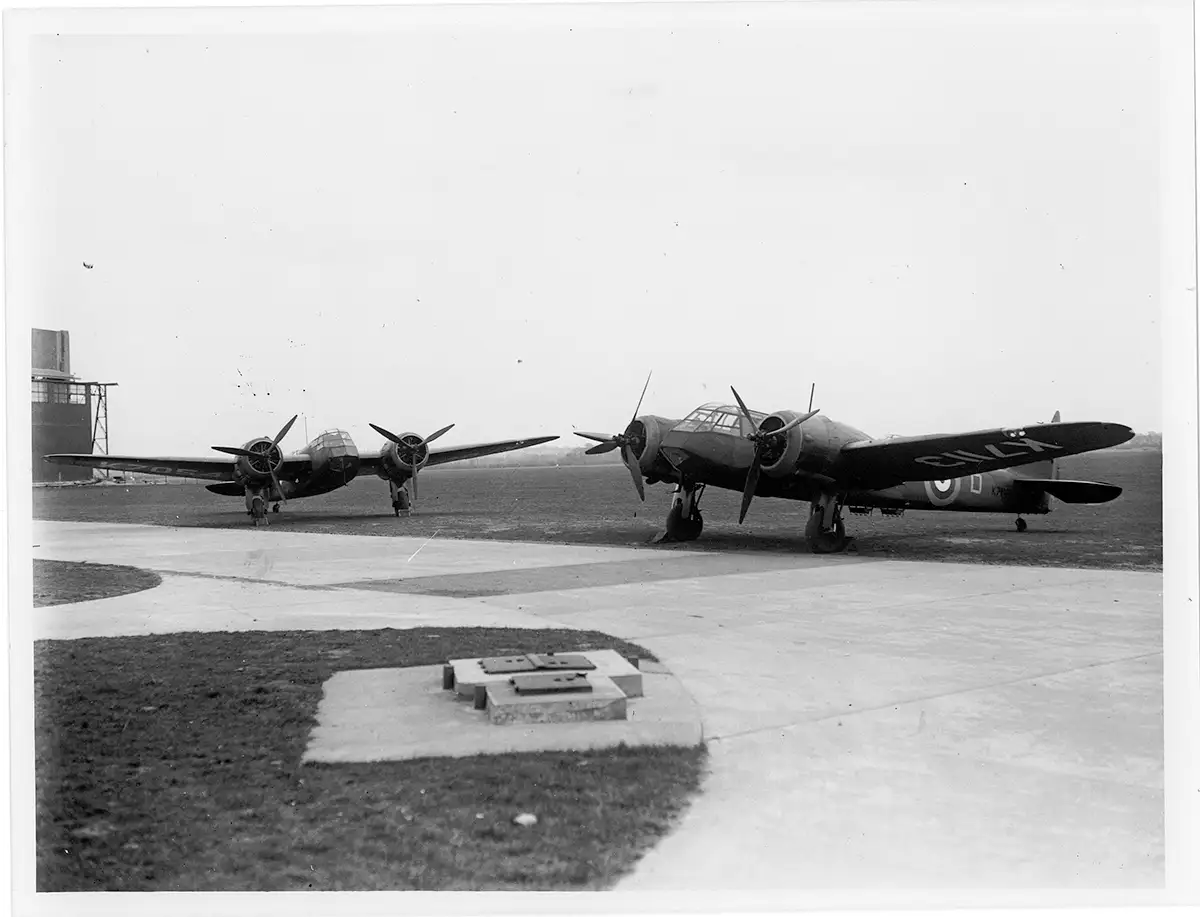
RAF Bicester was fit to burst. Its life as a training base for bomber pilots was a distant memory, as planes had outgrown the grass expanse that had christened the Handley Page Halifax and helped make the legend of the Bristol Blenheim, and instead the role for 1945 was one of logistics.
That meant forwarding hundreds of tons of equipment across the country and to the far reaches of the campaigns across Europe, which were edging towards victory. The Operational Training Unit (OTU) had ceded to the Forward Equipment Unit (FEU) at RAF Bicester in the weeks and months following D-Day, and in early 1945 ranks had swollen to more than 1000 personnel being camped around the airfield. The FEU began the year with a new name, 246 Maintenance Unit (MU), and a new Station Commander in Wing Commander PL Hancox, OBE, but with the same task at hand.
According to DS Blee’s A History of Royal Air Force Station Bicester, that could mean moving 1000 tons of equipment a week as the war crept to a conclusion.
The work was hard and the facilities cramped, as LAC Browne described so personally in Whizz-Bang, the site’s publication, in May 1945. He wrote of living out of tents on the windswept airfield 12 months earlier until the OTU eventually moved out, but ends with eloquence and hope. It is easy to assume that feeling was shared by thousands who had served over the past six years. Hope and an overriding sense of the unknown as to what would be next, after astonishing feats of gritty endurance.
Coincidentally, exactly five years before VE Day, on 7 May 1940, an LAC (Leading Aircraftman) Browne had dragged three fellow aircrew from a burning Hampden after they crashed on take-off from the nearby Upper Heyford. An often deadly occupational hazard that took the lives of so many from RAF Bicester and across Britain.